The 50p Plate Club: Dressing Four Wedding Tables from Charity Shops
There is a particular kind of wedding table that looks effortlessly thrown together: odd floral plates, slightly different wine glasses, a tangle of borrowed cake forks. It also happens to be one of the cheapest ways to dress a celebration. The trick is not to wander into Oxfam and buy every pretty teacup in sight. It is to shop like a small catering operation with a very tight budget and a very clear list.
If you are planning four wedding events — say a welcome supper, the wedding breakfast, an evening party and a farewell brunch — mismatched tableware can work beautifully. It can also become a mountain of chipped china in your spare room. Here is how to keep it useful, affordable and deliberately odd rather than just muddled.
Start with a shopping list, not a vibe
Before you set foot in a charity shop, decide the guest count for each event. For this plan, let us assume 40 guests. That is a realistic number for a village-hall wedding, a pub function room or a marquee in the garden. Write down every moment where food or drink will be served and what it will be served on.
A simple four-event tableware list looks like this:
- Welcome drinks: 40 glasses, 40 small plates for nibbles
- Wedding breakfast: 40 dinner plates, 40 side plates, 40 glasses, 40 cutlery sets
- Evening party: 40 glasses, 40 small plates for late snacks
- Farewell brunch: 40 plates, 40 mugs, 40 cutlery sets
You do not need four separate sets. You need enough to wash and reuse between events, plus a sensible buffer for breakage. For 40 guests across a weekend, aim for roughly 60 dinner plates, 60 side plates, 80 glasses, 50 cutlery sets and 50 mugs. That sounds like a lot, but charity shops and car-boot sales are exactly where this kind of volume hides.
How many plates and glasses you actually need
The biggest mistake is under-buying glasses. People put them down, forget them, and pick up a fresh one. For a weekend with four events, 80 glasses for 40 guests is not excessive. Mix wine glasses, tumblers and a few champagne flutes if you find them, but do not worry about matching.
Plates are easier. You can wash between events if you have access to a sink, a dishwasher and a couple of willing helpers. If your events are back-to-back on the same day, add another 20 dinner plates to the buffer. Cutlery is the piece people forget. Buy bundles rather than single forks. A charity shop might sell a bag of assorted cutlery for £1 or £2; a car-boot seller might do a box for £5. Check for bent tines and wobbly handles, but do not reject a fork because it is not the same as its neighbour.
Mugs are worth collecting early. They are cheap, useful for brunch and tea, and they make lovely informal favours if you have extras. Look for sturdy ones without cracks. Vintage gilt can be beautiful but often should not go in the dishwasher, so keep the delicate pieces for dry displays or hand washing.
Mixing patterns without a migraine
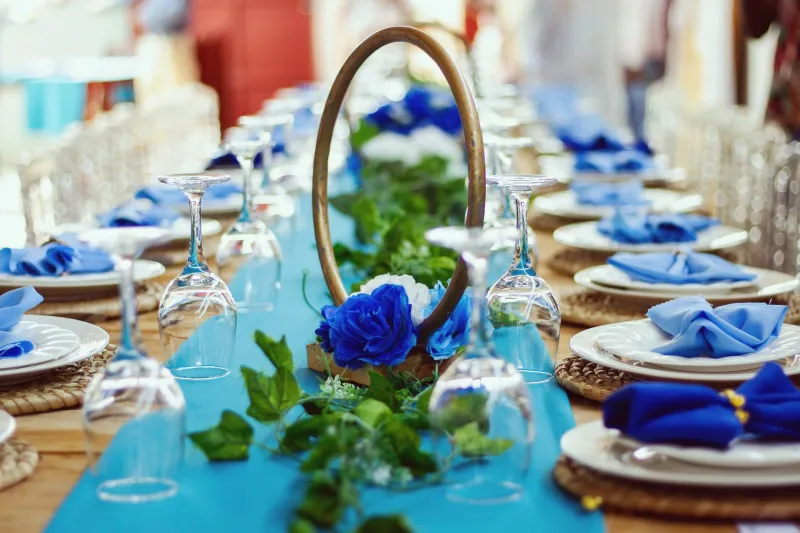
The secret to mismatched tableware is a quiet base. Pick two neutral tones — usually white and cream — and one accent colour. Then let pattern be the fun part. If you have a lot of floral china, add plain white plates to break it up. If you have mostly white, add a few coloured glasses or patterned side plates.
Avoid the temptation to use every colour in the shop. A table with pink roses, blue willow, green leaves and yellow rims can look like a jumble sale in the wrong way. A table with cream plates, a few blue-and-white patterns and plain glasses looks like a choice. Use plain pieces for the bulk of the setting and patterned pieces as accents.
Where to look and what to pay
Charity shops are the backbone of this plan. British Heart Foundation, Oxfam, local hospice shops and church-run shops are all worth a weekly loop. Ask volunteers if they have boxes out the back; some shops sell crockery in bundles because it takes up shelf space. Car-boot sales are cheaper still, especially late in the morning when sellers want to pack up. Freecycle, Facebook Marketplace and local WhatsApp groups are good for bulk collections — people clearing a parent's house often have a whole cupboard of plates going free.
Expect to pay 50p to £1 for a dinner plate, 50p for a side plate, 50p to £1 for a glass and £1 to £3 for a bundle of cutlery. Do not pay antique-shop prices for something that will hold sausage rolls. Check every rim for chips and every glass for cracks. A tiny chip on a cake plate is fine if it is not where someone will cut; a cracked wine glass is not.
The £150 sourcing plan
Here is a realistic breakdown for 40 guests across four events:
- 60 dinner plates at £1 each: £60
- 60 side plates at 50p each: £30
- 80 glasses at 50p each: £40
- 50 cutlery sets at 20p per set: £10
- 50 mugs at 20p each: £10
That is £150, leaving nothing for transport or washing supplies — so in practice, aim to spend £130 on the china and keep £20 for plastic crates, tea towels and washing-up liquid. You will not find everything in one weekend. Start six months before the wedding and buy in small batches. If you cannot find enough glasses, borrow from friends or top up with cheap plain tumblers. The look still works.
Transport, storage and the washing rota
Charity-shop china is heavy. Transport it in plastic crates lined with towels, not bin bags. Stack plates with a sheet of newspaper or a tea towel between each one. Keep glasses upright and pack them loosely with soft items around them. Store everything in a dry garage or spare room, not a damp shed.
Washing is the part nobody puts on the wedding planning checklist. If your venue has a dishwasher, check whether the china is dishwasher safe — vintage gilt and hand-painted patterns often are not. Otherwise, plan a hand-washing rota. Two people, a washing-up bowl, a drying rack and a stack of tea towels can get through 40 settings in about an hour. Soak cutlery first, wash glasses last, and keep a bucket for chipped pieces so they do not go back into circulation.
When hiring is genuinely smarter
Buying is brilliant for small weddings, relaxed venues and couples who enjoy the treasure hunt. Hiring is smarter if you are expecting more than 80 guests, if your venue insists on matching crockery, or if you need hot plates and proper serving dishes. Hiring also makes sense if you have nowhere to store 200 pieces of china or no time to wash it between events.
Get quotes early. For 40 guests, buying at £150 is usually cheaper than hiring. For 100 guests, the maths flips quickly, especially once delivery and insurance are added. A mixed approach works well: buy the pretty plates and glasses you love, hire the boring but essential bits such as water jugs, serving platters and spare wine glasses.
Styling tricks that make odd pieces look deliberate
Use a plain linen runner down the centre of the table. Cluster glasses by shape rather than pattern. Stack plates in alternating sizes so the mismatch reads as a design choice. Tie cutlery bundles with twine and a single stem of rosemary. Add candles in mismatched holders and keep flowers low so people can talk across the table. A handwritten menu card on each setting pulls the whole look together.
The goal is not a perfectly matched table. It is a table that feels generous, a bit nostalgic and entirely yours. Charity-shop china does that better than almost anything else — as long as you shop with a list, wash as you go and accept that the chipped plate at the back is part of the charm.